![]() |
MICHAEL
MASUCCI ' 'blog: http://masucci.blogspot.com mmasucci@eztvmedia.com |
"Media revolutionary with digital panache, demonstrating how Hollywood production values can be achieved using today's desktop technology" - TOP 100 PRODUCERS' AWARD- Multimedia Producer Magazine
"The video artistry of Michael Masucci is as beautiful as it is poignant and intentionally disturbing"- Daily Breeze
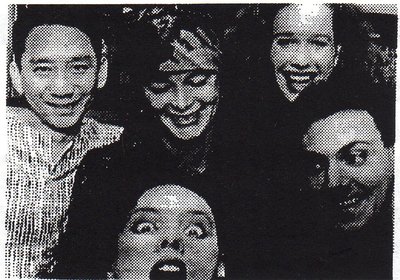
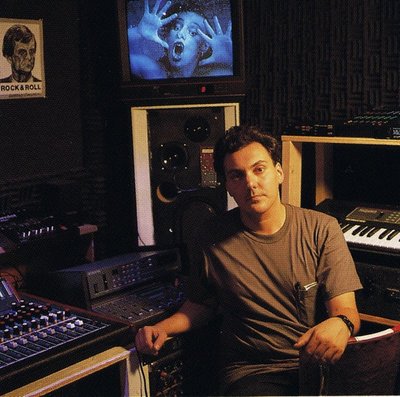
Bass playing at Bronx Science. circa 1969
|
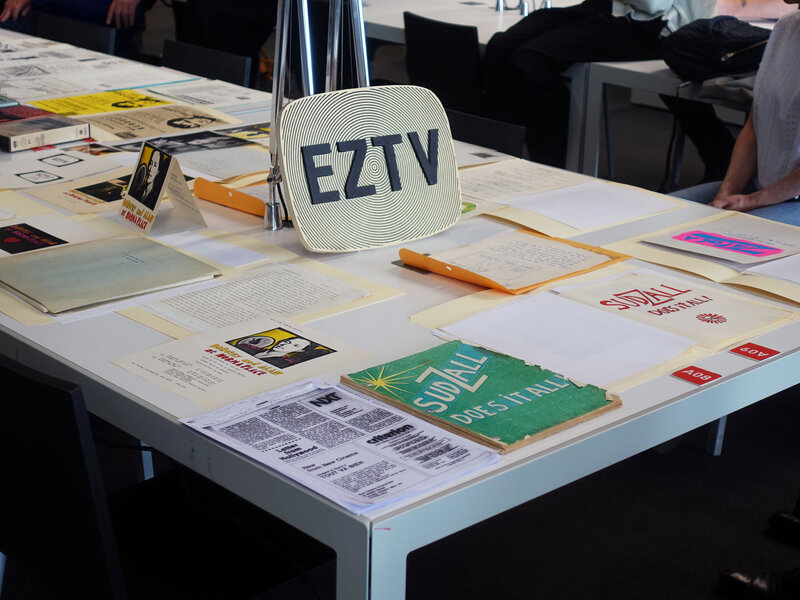
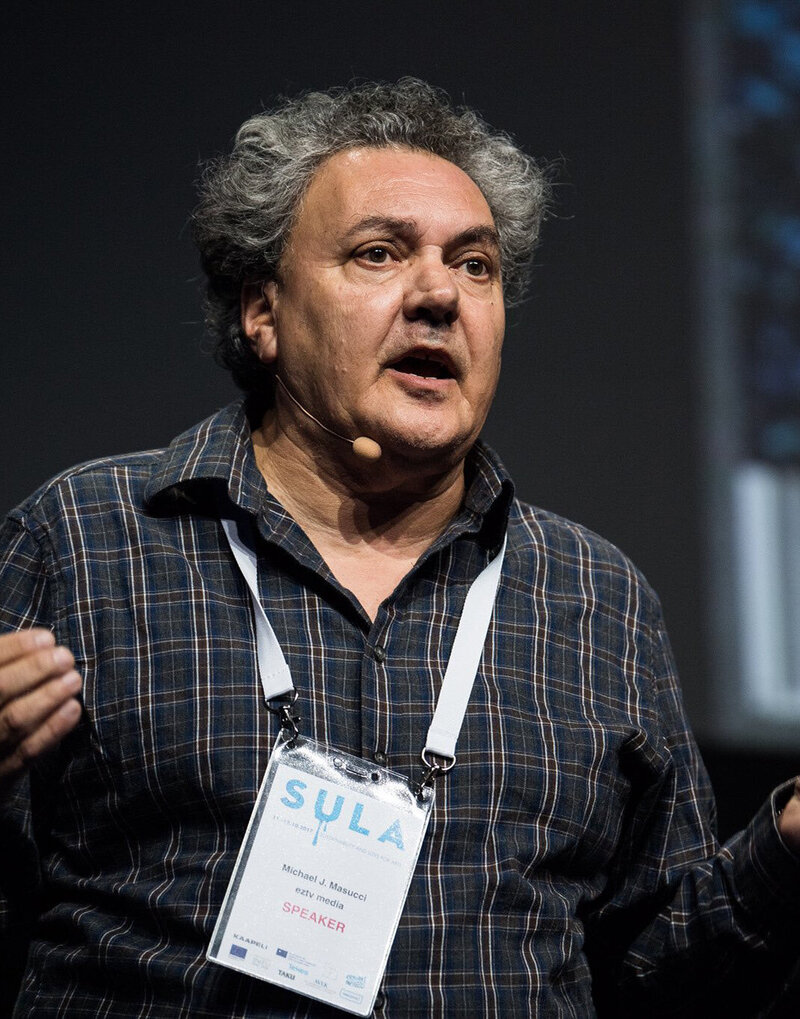
Michael Masucci is an acknowledged pioneer in the desktop and digital video movement, and an award-winning writer/producer/director/photographer/editor/musician whose work has been seen on the BBC, BRAVO, PBS as well as in such institutions as New York’s Museum of Modern Art and London’s Institute of Contemporary Art. As Director of EZTV, a 25 year old media arts organization in Los Angeles, he has overseen the production, post-production and exhibition of literally thousands of projects, and during EZTV’s 20th Anniversary year, the American Film Institute honored EZTV with a retrospective of EZTV desktop and digital works. Over the years EZTV has collaborated with or presented artists as diverse as painters David Hockney and Keith Haring, filmmakers Jean Luc-Goddard and Robert Altman, writers Arthur C. Clark, Allen Ginsberg and Charles Bukowski, digital artists Rebecca Allen and Jennifer Steincamp and philosopher Dr. Timothy Leary. "His affinity for the visual arts had already been nurtured through his job at Modernage Photographics in New York...The company's client list ranged from giant corporations to famed artists like Richard Avedon...But Masucci's aesthetic is at odds with the narrative stories from Hollywood film values...He prefers interpretive collaborations with performance artists, dancers and actors looking to stretch themselves."- Los Angeles Times Masucci has worked with individuals ranging from academy award winning actor Martin Landau to cartoon character Daffy Duck. Masucci has produced projects in China, the U.K., Thailand, Finland, Mexico and throughout the U.S. As co-creator of CyberSpace Gallery, he sought to develop new exhibition avenues for digital art, at a time when there were few curatorial opportunities for computer artists. In the last few years, he has been working with the government of Finland to develop design and cultural relationships between art and engineering. He has twice been named as one of Video and Multimedia Producer magazine’s "Top 100 Producers". He also serves as LA Chapter Director of the Association of Independent Video and Fillmmakers, as well as has served on the Advisory Board of DV Expo, the Board of Directors of Fringe Festival/Los Angeles, the Art Advisory Board for SIGGRAPH and the Art Advisory Board of the Los Angeles Free Clinic. "His 'guerilla' videotapes have been hailed by publications ranging from the L.A. Weekly and L.A. Times to trade papers Hollywood Reporter and Variety. An arts activist and musician, Michael divides his time between producing original works, judging tapes for contests and grants, and curating the EZTV Galley"- (from the book) CyberArts-Exploring Art and Technology An often-requested lecturer, Masucci has been featured speaker, a panelist, or taught master classes at a variety of internationally recognized conferences, including SIGGRAPH, Internet World, DV Expo and the Global Entertainment and Media Summit. He has also lectured for many community-based groups, including the California Arts Council, California Lawyers for the Arts, Highways Performance Space, the Los Angeles County Arts Commission LAFreeWaves and the Long Beach Museum of Art. "widely known as a pioneering media artist, but he's also been teaching filmmakers cost-cutting techniques since 1984."- Internet.com Masucci currently teaches digital motion graphics at the Otis College of Art & Design and has delivered guest talks at a number of colleges, including the American Film Institute, the School of Visual Arts (New York) and UCLA and museums such as the Institute of Contemporary Art (London). "something of a big-picture guy concerning video and multimedia in an art context"- Artweek Years before the current trend in desktop digital video, Masucci articulated the coming of the age of the personal computer's role in video production. He saw the imminent development of a new kind of desktop media artist who would combine the skills of writer, musician and filmmaker into a new chapter of cinema. It was not until a least five years latter that this idea became widely accepted. During the influential CyberArts International Conferences (1990-2) Masucci argued for the serious consideration of desktop video, at a time when historically, many experts were incorrectly predicting the role that Virtual Reality would play in the mid-1990's. Masucci, however, was right on target, and was among a handful of media experts that saw that technology must first successfully handle video on computers, before any immersive medium could be employed. In the pioneering textbook "CyberArts-Exploring Art & Technology", Masucci's lecture was included and starts with his quote from the conference: "Musicians, artists and writers are using the skills they mastered in the 1980's to enter the world of videomaking in the '90s. They're making PC-based workstations part of a production chain that begins with word processors, amcorders and MIDI gear to produce low budget (and no budget!) projects that can compete with traditional film productions and their large crews, heavy equipment, and extensive financial resources."- 1991 Years latter, the influential entertainment industry newspaper Variety, in their specialty publication "On Production", supported Masucci's once-controversial stance with this quote: "That (Jack) Valenti and EZTV Foundation director Michael Masucci should be reinforcing each other's arguments about budgetary propiety is a jaw-dropper in itself, even if they don't necessarily agree on the means of acheiving said propriety. Certainly Masucci's idea that using digital media for all aspects of production (not just effects and set pieces) has immediate implications for animation, feature or otherwise, where the experimentation phase can be utilized in the name of budget reduction that can't yet be done with live action." 1997 Masucci's sometimes controversial stance on the state of contemporary media has created a dialogue between so-called mainstream media and so-called fine art. Constantly striving to bridge the artificial gaps between art and entertainment, he seeks to create beautiful imagery and compelling story into a medium that both critic and audience can appreciate. "Video artist Michael Masucci-scruffy, intense, cerebral."- Daily News To read some of Masucci's ideas about digital media, and the fields of art & entertainment, please read his interviews by Steven Zuckerman in the Music & Film Network website Last year's interview: and an earlier interview: http://www.globalentertainmentnetwork.com/massucci.htm To read Masucci's controversial essay from the SIGGRAPH 2003 Art Catalogue: http://www.siggraph.org/artdesign/gallery/S03/essays/masucci.pdf To read Wired.com's article about Masucci & the LA Digilantes: http://www.wired.com/news/culture/0,1284,5781,00.html For more press quotes about Masucci and his productions and collaborations.
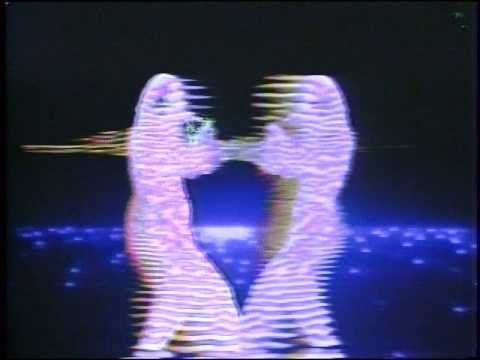
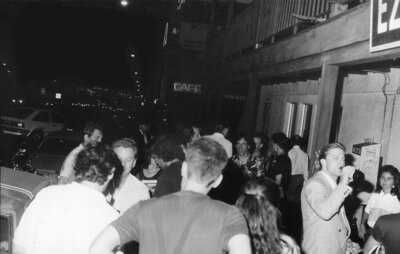
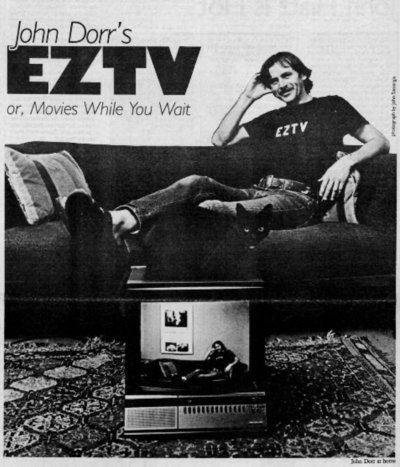
Early Career in New York City Artist, producer and arts advocate Michael Masucci was born in the Bronx, New York in 1952 in what is called the poorest county in the United States. There he attended parochial school elementary education, and graduated from the prestigious Bronx High School of Science where he was introduced to the pending synthesis of technology and art. His high school buddies, like Masucci himself, went on to careers which explore the sythesis of digital science into popular culture. These friends include, David Fiedler, Dave Winer (Frontiers software and weblog pioneer), Winn Schwartau (author of Information Warfare) and J. Raoul Brody (Bay Area keyboardist for TheatreSports and "True Fiction Magazine"). During Bronx Science, Masucci's respect for the value of traditional education waned. Attempting many variations (and not being able to find the field that would ultimately be the digital arts revolution) on the education theme, he dropped out, transferred out or was thrown out from many of New York's top colleges and universities including Columbia University (pre-med), Parson's School of Design (photography and illustration), Art Student's League of New York (drawing and painting) and various branches of the City University of New York (psychology). During these years, he also served as a research assistant at the Albert Einstein College of Medicine, a psychology teaching assistant at Bronx Community College and an assistant at Nicolas Roerich Museum. During both his high school and college years he also worked for his father, an optician. Masucci's father, Alan Masucci, holds several patents in optical design, and greatly influenced Masucci's understanding of the lens in photography. After 2 years of study (illustration and photography) at Parson's he left school to accept a full time position as Studio Manager and chief photography assistant at Alan Kaplan Studios, working on assignments such as Italian Vogue, Air Jamaica and Saks Fifth Avenue. After a year with Kaplan, Masucci accepted a position at New York's prestigious Modernage Photographics as a specialist in black & white archival printing. During his 3 years there he worked for an impressive list of the world's leading photographers (i.e. Richard Avedon, Francisco Scavullo, Bert Stern, Hiro), museums (i.e. the Metropolitan Museum of Art, International Center of Photography), publishers (i.e. Penthouse, Business Week), architects (i.e. I.M. Pei) and corporations (IBM, AT&T, TWA). The last half of his tenure there he worked within one of Modernage's unique services as an exhibtion photo-muralist, working under the most exacting standards which the current technology allowed. Around the time of his employment there, Modernage's Mural Department was clearly the world standard in excellence both technically as well as aesthetically. Masucci's experience there, routinely working with the world's leading artists and companies gave Masucci a broader education than the classroom could ever do. Working for Kaplan Studios and Moderange, together gave Masucci the experience that he needed to begin creating original work, work which would ultimately take him away from still photography altogether. During this time Masucci (a musican) also co-created Rock Against Racism-U.S.A., which presented a string of concerts and club dates (including a year long benefit series at the legendary Max's Kansas City) of local bands and musician's concerned with social justice. Noted defense attorney William Kunsler provided pro bono his legal expertise in defending in court the right of R.A.R.-U.S.A. to present these events. The legal victories which Kunsler won for Rock Against Racism directly resulted in re-opening of New York's Central Park Bandshell for use of live rock bands. R.A.R.-U.S.A. financed by monies made from benefit concerts all year long, presented 2 all day free concerts in Central Park. Police minimum estimates of 15,000 peaceful culturally diverse youths attended each of these two events. Among the many groups which Masucci performed in, the most influential for him was "The Studebakers" a band made up of pro guitar builders, designers and craftsmen. Leading guitarist for the Studebakers was Stuart Spector, whose factory produced what many consider the finest electrical basses made. Working for Spector at the time was Ned Steinberger, still perfecting his ultimately revolutionizing polycarbon resin bodied "Steinberger Bass". The Studebakers were the first group to experiment with these newly invented designs coming out of Spector's Brooklyn factory loft. Being introduced to this level of musical instrument design and building, fine tuned Masucci's understanding of music as a whole. He began studying privately with Don DiGrazio, who was teaching voice and guitar at Juillard. With DiGrazio, he learned to operate a recording studio and to produce his own music. He joined an improvisational theater group with a mix of working Broadway and off-Broadway actors, with a few dancers and musicians. He also did stage and lighting for off-Broadway. It was also during these years that he experimented with video for the first time. His music group was selected to be the subject of the Master's project for directorial student Shiva Kumar at the Center for Television at Brooklyn College. Video allowed Masucci for the first time to integrate his audio and visual works into single pieces. Masucci became hooked on video . He decided to leave his highly promising career in the photography industry to become a video artist. After leaving Modernage, Masucci relocated to Los Angeles where he has become an active voice in the video and multimedia scene ever since. MID-CAREER When Masucci left Modernage he spent 2 months assisting in re-construction projects, saved up some money and in November 1982 after Greyhound busing it across the country, seeing its cultural and geographical vastness for the first time, arrived in Los Angeles. His only acquaintance in Los Angeles was actor/artist Rademes Pera (the childhood star from "Kung Fu") who was in an improvisational theater workshop with Masucci back in New York. Rademes, a celebrity, showed him around Southern California and introduced Masucci to the local culture. Within a few days in Los Angeles, Pera got Masucci onto radio station KMET. Masucci took a job at the Factory Fashion Works, a trendy 80's phenomenon, a youth-oriented clothing chain with live disc jockeys, fashion shows, events, contests and with the arrival of Masucci, video. There he created tapes to be used within one of Los Angeles' first "video walls", which the Factory installed in their Sherman Oaks flagship store. In April 1983, he discovered EZTV, quickly joining forces with John Dorr in the establishment of this unique venue/facility. Masucci utilized EZTV's facilities to create videos called "Standing Waves" for the Factory as well as for the emerging "rave" scene in L.A.'s trendiest nightclubs. He also began exhibiting his short video/films at galleries, coffee houses and cabarets around town. The American Film Institute, in 1984 exhibited Masucci's work in a screening dedicated to EZTV work. This was the first of several AFI screenings of his work over the years, followed by Masucci serving for numerous times as a guest lecturer or judge on a festival or grant committee. In 1985 at the suggestion of computer artist Victor Acevedo, he served as Technical Services Director for "On the Threshold", co-produced by Joan Collins and Robert Gelman, an event co-sponsored by SIGGRAPH, and other pioneering techno-culture organizations. Acevedo curated an exhibition of digital print artists. Through this event, which took place at the Hollywood Palace, Masucci met many of the forces that were to shape his work and world in coming years. He produced three new video pieces to accompany live performance events, collaborating with artist Sandra Tsing Loh, musician Jeff Rona and choreographer Eve Lenzner. Masucci introduced EZTV's audience to an embryonic multi-media world with Halcyon, paint-box and graphics. "Standing Waves" were used as video wallpaper at N.A.B. and as the backdrop to fashion shows, poetry readings and even go-go dancers.
After several years of pro-bono service to EZTV, Masucci became EZTV's first employee, and worked in a variety of professional capacities including cinematographer, sound mixer and most intensely as an editor. There he also trained film editors and animators (Orson Welles' editor to Corny Cole, Greg Ford) the use of video editing technology. His talents contributed to most of EZTV's original productions including, the 27 part Lannan Literary series, Eric Bogosian's "Fun House" and serving in a technical capacity in literally thousands of projects brought into EZTV which Masucci was a significant contributor to. Many have appeared in theatres, universities, festivals, television, as well as laserdisc and video. Masucci continued to produce a number of tapes for use in L.A.'s hottest nightclubs and helped create the ambient video club scene along with a select group of pioneering video artists and digital animators, including Ron Hays, Jenkins and Ed Tannenbaum. These early media artists used crude analog tools, often home made or modified, to create feedback loops, animated graphics and color cycling. As technologies evolved, the work stayed on top of the development curve, as a plethora of manufacturers and software developers came and went. Masucci's own work became increasingly complex throughout the eighties and although his technology became ever more miniaturized, his camera and editing styles advanced as he produced works in both video and performance. His collaborations with choreographer Zina Bethune allowed him access to experimental technology from Sony and led him to China in 1988. The documentary produced there, narrated by Martin Landau and described as "inspiring" by the L.A. Weekly, premiered at the AFI Video Festival. He also became increasingly popular within the world of non-profit arts administrations. He began to receive more significant coverage by the L.A. Times, establishing his local reputation with critics and academics. He began a series of community involvement and became involved in a number of non-profit organizations inlcuding serving on the board of directors of the FRinge Festival, served as a board of arts advisor for the L.A. Free Clinic produced a series of PSA's for the Venice Family Clinic and as an advisor for L.A. Freewaves. He has been a requested speaker for a number of colleges including UCLA, USC, AFI, conferences by MTV/Billboard, Miller Freeman Publishing and the Invention Convention. Masucci continued to expand his creativity with a continuing series of collaborations, commissions and exhibitions at many of L.A.'s most important new media centers including the Electronic Cafe International, Highways, Los Angeles Theater Center and Museum of Contemporary Art, Convention Center, Los Angeles Contemporary Exhibitions, Pepperdine University, University of Southern California, Barnsdall Art Park and Skirball Cultural Center. In
1997, Masucci completed the third phase of a collaboration between himself,
EZTV and the London Institute of Contemorary Art. The collaboration
began with the showing of "Outside Looking In: One Last Visit with Timothy"
which is a 30 minute documentary and interview with legendary Dr. Timothy
Leary in April of 1996. "Outside" premiered at the ICA . The second
phase of the collaboration was the residency of celebrated London-based
performance artist Ronald Frasier-Munro at EZTV. EZTV, with Masucci
directing, was commissioned to create an original video based upon a
concept by Ronald Frasier-Munro called "Dschungel". Info On Rock Against Racism-U.S.A. w/Photo Gallery by Alan Kaplan See:
Artweek
|